EN
EN



What Makes Velcro Patches Reusable?
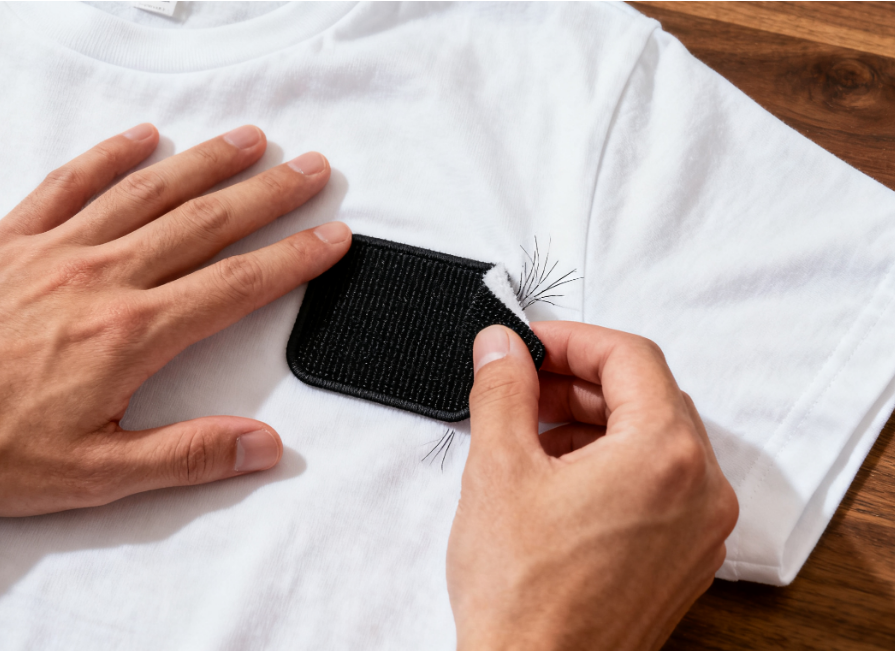
Hook-and-loop fasteners achieve reusability through their dual-component design. The hook side’s plastic micro-hooks latch onto polyester or nylon loops, creating strong but reversible bonds. High-quality patches maintain 75–85% of their grip strength after 1,000 cycles (Textile Institute 2023), unlike adhesives that degrade with repositioning.
Cycle Life of Hook and Loop Fasteners in Real-World Use
| Grade | Average Cycles | Common Applications |
|---|---|---|
| Industrial | 25,000+ | Military gear, safety equipment |
| Commercial | 10,000–15,000 | Backpacks, medical devices |
| Economy | 3,000–5,000 | Casual apparel, accessories |
Factors Affecting the Reusability of Hook and Loop in Applications
- Fiber Thickness: 3D nylon loops withstand 40% more cycles than flat polyester
- Contamination: Dust reduces fastener effectiveness by 60% within 200 cycles
- Alignment: Misaligned attachments accelerate hook deformation
Comparative Reusability: Hook and Loop vs. Sew-On and Adhesive Patches
Sew-on patches require destructive removal–damaging fabrics in 92% of cases according to 2022 tailoring surveys–while pressure-sensitive adhesives allow only 3–5 reliable repositions. In contrast, hook-and-loop systems offer reusable mounting without substrate damage when properly maintained.
Durability Performance of Velcro Patches in Demanding Conditions
How Durability Is Measured in Hook and Loop Fasteners
When it comes to durability, manufacturers typically run standard tests looking at peel strength—the force required to pull parts apart—and cycle life, which counts how many times something can attach and detach securely. The ASTM International has set up these protocols to check performance standards. High-quality products often last through more than 10,000 cycles and still hold about 85% of their original bond strength. Take military grade patches, for instance, they stay fully functional even after going through over 100 industrial washing cycles according to Ultrapatches research from 2024. This kind of testing basically mimics what happens in actual use conditions, giving us confidence about product longevity under stress.
Impact Resistance and Wear Over Time in Velcro Fasteners
When subjected to shear forces and constant stress over time, hooks tend to deform gradually. The best nylon-based Velcro patches can actually hold around 35 pounds of sideways pressure before they start losing their grip. These are way better than polyester versions too, standing up to wear and tear about 40 percent longer. Some tests done in marine conditions found that patches treated to resist saltwater kept roughly between 85 and 90 percent of their original strength even after sitting in the elements for half a year straight. That kind of durability makes these patches particularly a good choice for things like camping equipment or fishing gear that gets wet all the time.
Case Study: Long-Term Performance of Velcro Patches on Tactical Gear
A 12-month field evaluation of Velcro patches on military helmets and plate carriers revealed:
| Metric | Initial Performance | 12-Month Retention |
|---|---|---|
| Average Peel Strength | 18 N/cm² | 16.2 N/cm² (90%) |
| Cycle Failure Rate | 0% | 4.3% |
Results confirm that well-maintained Velcro systems retain over 90% functionality in high-stress environments, though edge wear remains a common failure point under constant use.
Environmental Factors Affecting Fastener Lifespan
UV exposure degrades hook-and-loop bonds 2.5 times faster outdoors than indoors. Temperature extremes (-30°C to +60°C) reduce adhesive backing integrity by 30–50% in non-spec patches. To counter these issues, manufacturers use:
- UV-stabilized polymers (extending outdoor lifespan by 200–300%)
- Hydrophobic fiber treatments (reducing moisture absorption by 70–80%)
- Salt-resistant coatings (slowing corrosion by 40–60%)
Patches incorporating these features maintain 80% functionality in coastal conditions, compared to untreated versions failing within six months (Anmyda 2024).
Material Quality and Manufacturing Impact on Velcro Patch Longevity
Nylon vs. Polyester: Material Choices in Velcro Construction
Industrial grade Velcro® is mostly made from nylon because it can handle about 35% more tension than polyester according to research published in Textile Research Journal back in 2022. The way nylon molecules are arranged gives it much better resistance against wear and tear, which matters a lot for things like military gear where fasteners might need to work hundreds of times over. But there's another side to this story. When exposed to sunlight or saltwater environments, polyester actually holds up better. Tests show polyester keeps around 92% of its sticking power after prolonged exposure while nylon drops down to about 78%, as noted in Marine Equipment Digest from last year. Smart manufacturers have started mixing these materials together lately, using nylon for the hooks and polyester for the loops. This combination gets the best of both worlds: tough enough to withstand forces up to 1,200 psi yet still maintains color integrity for roughly 5,000 hours under harsh conditions.
Manufacturing Standards and Their Effect on Durability of Velcro Patches
Industrial-standard stitching (8–12 stitches per inch) reduces edge fraying by 60% compared to consumer-grade 4–6 SPI construction. Heat-treated hook formations—processed above 300°F (149°C)—show 40% better shape retention after 200 wash cycles. Third-party testing shows patches meeting MIL-STD-1913 standards withstand 800 lb/in² shear forces, outperforming generic alternatives by a 3:1 margin.
Do Premium Brands Offer Significantly Better Cycle Life?
Testing shows that high-quality Velcro patches still stick pretty well after 500 cycles, holding around 89% of their original grip. The cheaper ones aren't so lucky though, dropping down to just 62% adherence by the time they hit 300 cycles. What really makes a difference isn't just how much something costs but how carefully it was made. When companies use machines to cut those little hooks precisely aligned, the sticking power stays consistent at about 97%. But when workers put them together by hand, there's quite a range from batch to batch, sometimes varying as much as plus or minus 22%. For applications where reliability matters most, look for products from factories certified under ISO 9001 standards. These makers typically offer warranties that last almost three times longer than standard options, covering five whole years instead of just two, and they back up those claims with actual performance guarantees.
Best Practices for Maintaining and Extending Velcro Patch Lifespan
Cleaning Techniques for Sustained Reusability of Velcro Patches
Regular cleaning preserves grip and appearance. Recommended methods include:
- Hook side maintenance: Remove lint and debris with a fine-tooth comb or specialized tool
- Loop side care: Gently brush with a soft-bristled toothbrush to dislodge particles
- Deep cleaning: Hand wash in lukewarm water with mild detergent, then air dry flat
- Drying precautions: Avoid heat sources or mechanical dryers that may warp hooks
Harsh chemicals and machine washing should be avoided to prevent accelerated material breakdown.
Avoiding Common Damage Causes in Hook and Loop Fasteners
Extend patch life through preventive care:
- Contaminant barriers: Store patches closed (hook-to-loop) to minimize hair and fiber buildup
- Environmental protection: Keep away from direct sunlight and temperatures exceeding 140°F (60°C)
- Gentle handling: Peel slowly from the edges rather than pulling straight apart
- Monthly inspections: Check for bent hooks (straighten with a sewing needle) and matted loops
Replace patches that lose more than 40% of their adhesion strength to ensure secure attachment.
FAQs
How many times can a Velcro patch be reused?
The reusability of Velcro patches largely depends on the quality and application. Industrial-grade patches can exceed 25,000 cycles, while economy-grade ones may last 3,000–5,000 cycles.
Do Velcro patches lose adhesion strength over time?
Yes, Velcro patches gradually lose adhesion strength, especially when exposed to environmental factors such as UV light, extreme temperatures, and contamination.
Can Velcro patches be washed?
Velcro patches can be hand washed in lukewarm water with mild detergent. Avoid mechanical dryers or harsh chemicals to prevent material damage.
What materials are Velcro patches made from?
Velcro patches are primarily made from nylon or polyester. Nylon offers higher tension resistance, while polyester performs better in sunlight and saltwater environments.
Table of Contents
- What Makes Velcro Patches Reusable?
- Cycle Life of Hook and Loop Fasteners in Real-World Use
- Factors Affecting the Reusability of Hook and Loop in Applications
- Comparative Reusability: Hook and Loop vs. Sew-On and Adhesive Patches
- Durability Performance of Velcro Patches in Demanding Conditions
- Material Quality and Manufacturing Impact on Velcro Patch Longevity
- Best Practices for Maintaining and Extending Velcro Patch Lifespan
- FAQs